Summary of North Island Robin Breeding Season 2006 - 2007
·
6 breeding pairs were monitored in the core of the project area (one
more pair than last season).
·
One pair was likely to have had its first clutch before it was detected
hence the additional figures in brackets.
·
12 (13) nests, 23 (25) chicks, 17 chicks banded (all banded in the nest)
·
2 (1) pair/s had 2 clutches and 3 (4) pairs had 3 clutches.
·
Average chicks per female = 4.6 (5)
·
Single birds still in the core: unbanded (male) at beginning of
Whatitiri Track.
·
Two of the three single birds from last season (male YM- and female B-M)
moved into new territories this year. The remaining single bird Y - GM male has
not been seen this season.
·
WW-RM (juvenile from last season) was seen in R12 area by a contractor
in August 2006 and heard again in October and mid November but not seen since.
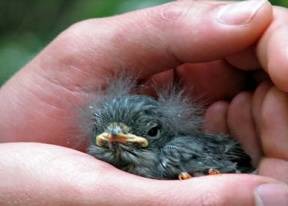
Photographer: Karen Colgan
·
8 breeding
pairs were monitored in the core of the project area (three more pairs than last
season).
·
A male bird
not seen since the translocation in April 2005 was one of a new breeding pair.
·
Successful
breeding by an unbanded female was observed for the first time.
·
15 nests, 24
chicks, 11 chicks banded (all banded in the nest)
·
1 pair was
not seen again after their first clutch and 1 male disappeared after the first
clutch.
·
1 pair of
unbanded birds had 5 infertile eggs in 2 nests.
·
3 pairs had
2 clutches and 1 pair had 3 clutches.
·
1 male had
11 chicks with 2 females in nearby territories.
·
Average
chicks per female = 3.4 (compared with 4.5 in the past but this average was
mainly due to young females not being as successful as their older counterparts
… yet).
·
Birds still
in the core of the intensive predator control: bird/s heard on R12/R13 line for
2 seasons now but not yet found. Trampers identified Y-GM (an original transfer
bird), early in the season on Robinson Ridge track but no sighting since. It
was not seen during the 2006-2007 season.
·
3 pairings
stayed the same, 1 female GM-R paired with G-GM a single bird from last year.
Her original mate GM-Y was seen early in the season.
·
The pair at
Ld were in a 2005-6 territory where no pair was found last year, although a
single unbanded bird was sighted which is likely to be the unbanded female
currently breeding in that territory.
·
New
territories were formed at TA/3, and L5.5.
·
The breeding
season was shorter than previous years - the bush became very dry in late
January/February.